What Sagamihara's Master Craftspeople Know About Leading Without All the Answers
There's a particular kind of pressure that settles over American boardrooms, startup war rooms, and even weekend Little League coaching sessions. It's the unspoken expectation that whoever is in charge should know. Know the answer, know the plan, know what comes next. Hesitation reads as weakness. Saying "I'm not sure" feels like handing over your badge.
But spend any time learning about the artisan workshops tucked into the Sagamihara region — the woodworkers, the textile makers, the ceramicists who've spent decades perfecting their craft — and you start to notice something that cuts against that grain entirely. The most respected people in the room are often the ones most willing to say, out loud, that they haven't figured it out yet.
That's not a bug in their culture. It's a feature they've been cultivating for generations.
The Concept You've Probably Never Heard Of
In Japanese, there's a phrase — ma-yoi — that carries a meaning American English doesn't have a clean word for. It roughly translates to a kind of delightful uncertainty, a wandering in the space between knowing and not-knowing. Unlike the anxious, fix-it-fast relationship most of us have with not having answers, ma-yoi treats that in-between space as genuinely productive. Even beautiful.
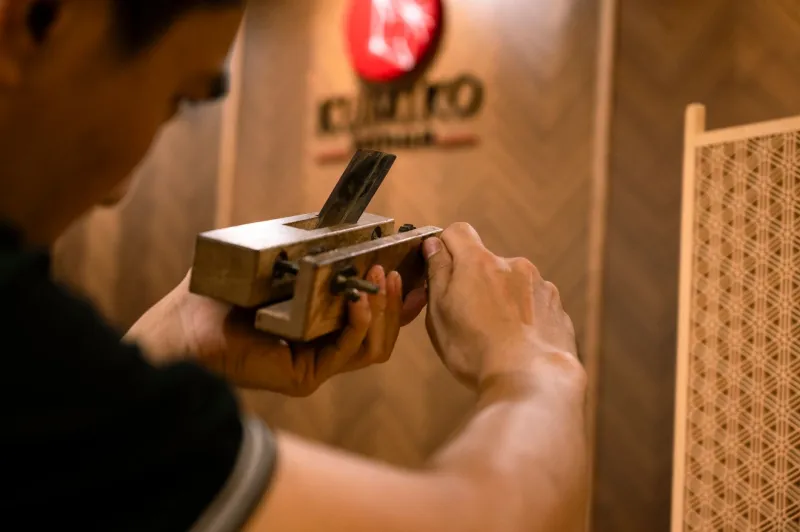
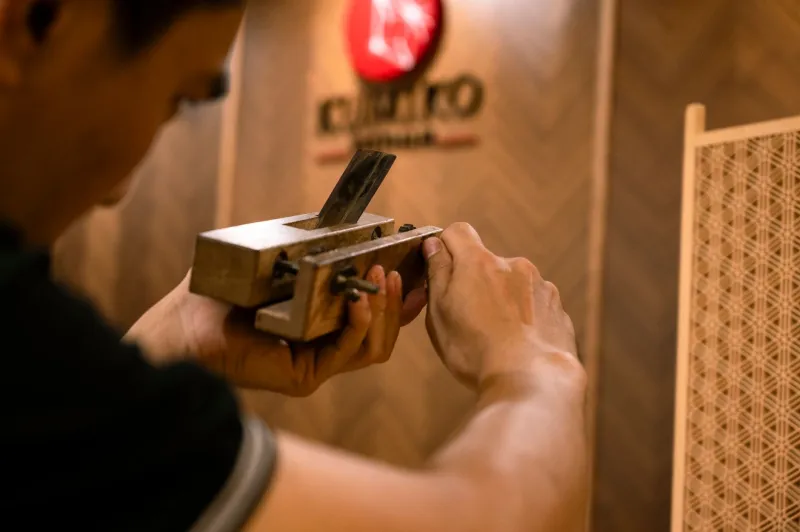
Sagamihara's craft tradition leans into this hard. A master woodworker there doesn't arrive at a new piece with a locked-in blueprint. They show up with intention, yes, but also with a willingness to let the grain of the wood — the unexpected knot, the slight warp that changes everything — inform where the work goes. The uncertainty isn't something to bulldoze past. It's something to sit with, read carefully, and respond to.
Now map that onto leadership. How often do we bulldoze?
Why American Hustle Culture Got This Backwards
Let's be honest about the cultural script we've all absorbed. From business school case studies to TED Talk mythology, the dominant American leadership narrative is built on a specific archetype: the decisive visionary who walks into chaos and imposes order through sheer conviction. Steve Jobs. Vince Lombardi. The fictional CEO who turns the company around in act two.
That story isn't useless — decisiveness matters, vision matters — but it leaves out a massive piece of the puzzle. It treats knowledge gaps as shameful, something to paper over with confidence until reality catches up. And in the meantime? Teams learn pretty quickly that bringing problems upward is risky. Admitting confusion is career-limiting. So they stop doing it.
The result is organizations where bad news travels slowly, where people perform competence instead of building it, and where leaders make decisions based on incomplete information because nobody felt safe enough to say "actually, I think we're missing something here."
Sagamihara's apprentice culture, by contrast, is built on exactly the opposite assumption.
What Vulnerability Looks Like When It Actually Works
In the workshops of Sagamihara, the relationship between a master craftsperson and their apprentice isn't transactional. It's not "here is everything I know, memorize it, reproduce it." It's more like a shared investigation. The master openly revisits their own techniques, sometimes in front of apprentices who've only been at it a few months. They ask questions about their own process. They demonstrate uncertainty not as a failure of expertise, but as evidence of ongoing engagement.
This does something specific for the people watching. It gives them permission to not know things too. And more importantly, it models that not-knowing is the beginning of learning, not the end of credibility.
Research in organizational psychology — the kind that's been influencing companies from Google to smaller manufacturing firms in the Midwest — backs this up pretty clearly. Teams where leaders openly acknowledge knowledge gaps consistently show higher rates of what researchers call psychological safety. And teams with psychological safety are, almost without exception, more innovative, more honest about problems, and better at course-correcting before small issues become expensive disasters.
The Sagamihara workshops have been running this experiment for a long time. They just didn't need a Harvard Business Review study to tell them it worked.
Practical Moves for Leaders Who Want to Try This
Admitting you don't know something isn't the same as abandoning authority. That's the misconception worth clearing up first. You can hold direction and admit uncertainty at the same time — in fact, the best leaders do this constantly.
Here are a few places to start:
Ask genuine questions in meetings. Not rhetorical ones. Not leading ones. Actual questions where you don't already know the answer and you're genuinely curious what your team thinks. The shift in room energy when people realize you actually want to hear from them — not just perform agreement — is noticeable almost immediately.
Name the unknowns out loud. When you're walking into a project with real uncertainty about how it'll unfold, say so. "Here's what we know, here's what we're still figuring out" is a more honest and ultimately more useful frame than projecting false confidence that your team can see through anyway.
Revisit your assumptions regularly. Sagamihara's craftspeople don't treat mastery as a destination — they treat it as a practice that requires constant questioning. What did you believe about your industry, your customers, your team three years ago that you've since revised? Make that revision visible. It signals that learning is valued, not punished.
Create space for people to say "I don't know" without consequence. This one takes time and consistency. If someone on your team admits uncertainty and gets burned for it, the whole system collapses. But if it's met with curiosity — "okay, so what do we need to find out?" — you start building something genuinely different.
The Longer Game
There's something almost counterintuitive about the reputation Sagamihara's master artisans carry. These are people who've spent decades — sometimes literal decades — developing their skills. They have every right to project authority. And in many ways, they do. But the authority doesn't come from pretending to have all the answers. It comes from a demonstrated commitment to the pursuit of answers, including the willingness to admit when they're still looking.
That's a different kind of credibility than American leadership culture typically chases. It's slower to build. It requires more honesty, more patience, more comfort with the uncomfortable space of not-yet-knowing. But it tends to hold up a lot better under pressure.
If you're running a team, building a business, or just trying to show up better for the people who look to you for direction — the Sagamihara approach is worth borrowing. Start small. Try saying "I don't know" in your next meeting and see what happens.
You might be surprised how much trust that two-word sentence can build.