Years Before Mastery: What Sagamihara's Apprentice Tradition Can Teach You About Getting Really Good at Something
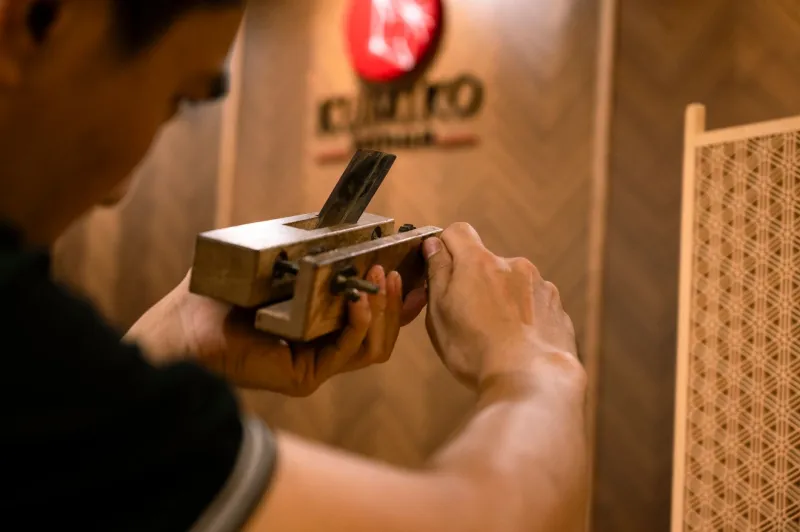
There's a woodworker in Sagamihara who spent the first two years of his apprenticeship doing almost nothing but sharpening chisels. Not using them. Sharpening them. His teacher — a third-generation furniture maker whose workshop sits at the edge of a quiet residential street — wouldn't let him touch a piece of wood until he could feel the difference between a blade that was sharp and one that was right.
"Most people want to skip to the result," the craftsman, Kenji Murakami, told us during a visit to his workshop. "But the result is just the surface. What's underneath it is everything."
That philosophy — patient, unhurried, obsessively foundational — runs through the artisanal communities of Sagamihara like a current. And for Americans who've grown up in a culture that celebrates the speed of learning as much as the depth of it, spending time with these makers can feel like a quiet corrective.
What "Apprenticeship" Actually Means Here
In the US, apprenticeship tends to mean a structured program with a defined endpoint — complete the hours, pass the test, get the credential. It's transactional by design. In Sagamihara's traditional craft workshops, the model is something different.
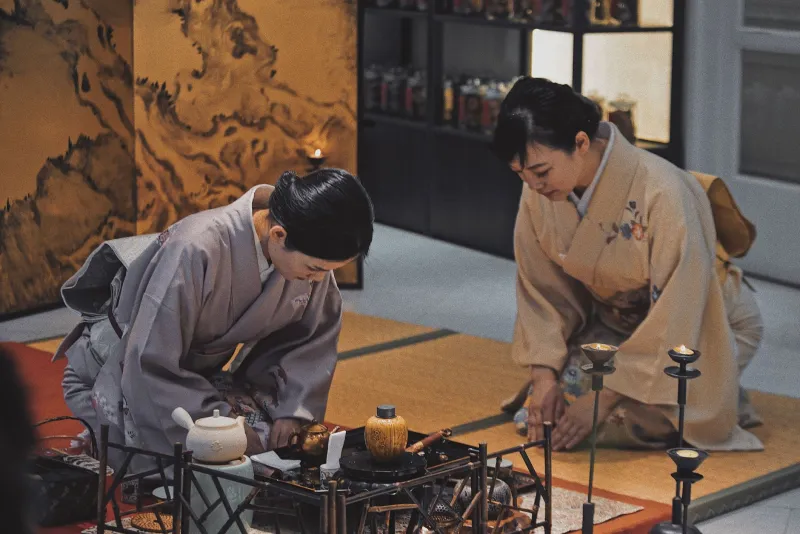
The Japanese concept of shokunin — often translated as "craftsman" but carrying much deeper connotations of lifelong dedication — shapes how skills are passed down. A shokunin doesn't just master a technique; they commit their working life to refining it. Apprentices, called deshi, enter into relationships with masters that are closer to mentorships than employment arrangements. Progress isn't measured in months or certificates. It's measured in judgment — the kind that only comes from repetition so deep it becomes instinct.
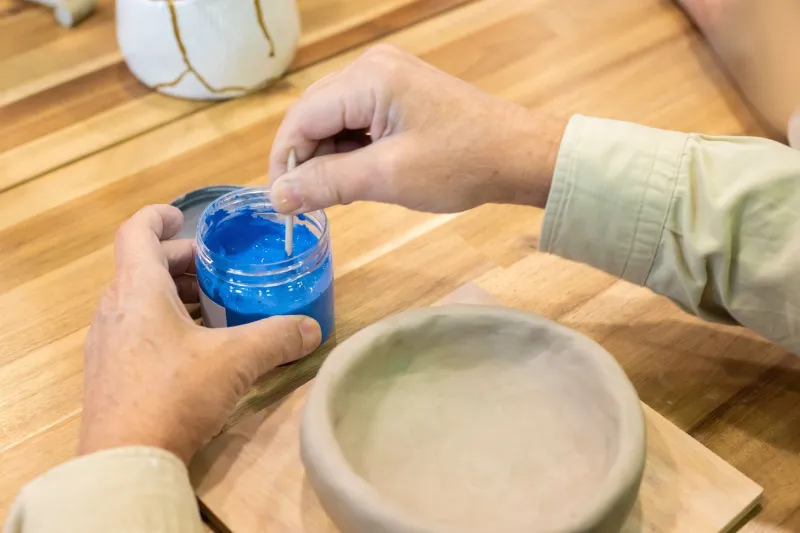
Ceramic artist Yuko Ishida, who runs a small studio in the Midori Ward area of Sagamihara, started her training at 19. She was 26 before her teacher allowed her to sell a piece under her own name.
"It wasn't punishment," she says, laughing at the memory. "He was protecting me. He knew that if I sold work before I was ready, I would learn the wrong lessons — that good enough was enough."
The Problem With 'Good Enough'
American productivity culture has a complicated relationship with mastery. On one hand, we celebrate it — we buy books about the 10,000-hour rule, we watch documentaries about obsessive chefs and furniture restorers. On the other hand, we've built an entire economy around shortcuts. Thirty-day challenges. Micro-credentials. "Learn woodworking this weekend" kits.
None of that is inherently bad. But there's something worth examining in the gap between our admiration for mastery and our actual tolerance for the process of achieving it.
Murakami puts it plainly: "In Japan, we say ichi-go ichi-e — this moment will never come again. When I'm working on a piece, I'm not thinking about the next piece. I'm here. Completely here. That takes practice too."
That presence — that refusal to mentally skip ahead — might be the hardest part of the Sagamihara approach to translate into an American context. But it's also arguably the most valuable.
What Multi-Generational Craft Actually Looks Like
One of the more striking things about Sagamihara's artisan community is how often skill travels through families. Murakami's father was a carpenter. His grandfather built traditional tansu chests. The knowledge passed down wasn't just technical — it was attitudinal. A way of standing in the workshop. A way of listening to the wood.
"My father never explained things in words," Murakami says. "He showed me. Again and again. And then one day I understood not just what he was doing, but why."
This kind of embodied knowledge — knowledge that lives in the hands and the body, not just the brain — is notoriously hard to transfer through digital instruction. It's one reason why, despite the explosion of online craft tutorials, there's been a quiet but steady revival of interest in in-person apprenticeships and mentorship arrangements among American makers.
Ceramic studios in Portland. Blacksmiths in rural Vermont. Woodworkers in North Carolina. More and more, the people drawn to these workshops aren't just hobbyists — they're professionals from other fields, burned out on screen-based work and hungry for something that takes real time to learn.
Practical Takeaways for American Makers
You don't need to move to Sagamihara to absorb some of this mindset. But you might need to make a few deliberate choices.
Slow down your feedback loop. One of the defining features of traditional Japanese apprenticeship is that feedback comes slowly and meaningfully. Try working on a skill for a month before evaluating your progress. Resist the urge to post, share, or seek external validation every step of the way.
Find a teacher, not just a tutorial. There's a real difference between learning from someone who is invested in your development and learning from content designed to be consumed quickly. If you're serious about a craft — whether it's woodworking, ceramics, cooking, or something else entirely — look for a mentor relationship, even an informal one.
Practice the fundamentals past the point of boredom. Murakami sharpened chisels for two years. That sounds extreme, but the principle scales. Whatever skill you're building, the boring foundational stuff is usually where the real growth happens. Resist the urge to jump to the interesting parts too soon.
Make something you'll never sell or show. Ishida still keeps a shelf of pieces she made during her training years — pieces she considers failures. "They remind me where I came from," she says. "And they remind me that the making was the point, not the result."
Why This Matters Beyond Craft
Sagamihara's apprenticeship culture isn't just about furniture or ceramics. It's a worldview — one that treats skill as a living thing that grows slowly, demands respect, and can't be rushed without being diminished.
In a culture that increasingly rewards the appearance of expertise over its substance, there's something almost radical about that. About choosing depth over speed. About being willing to spend years earning the right to say you really know something.
Murakami finishes the thought the way he started it — quietly, without drama. "Anyone can make something quickly," he says, running his thumb along the edge of a newly finished cabinet door. "Not everyone is willing to wait until it's right."
That patience, it turns out, is the craft itself.