Hosting Like a Ryokan: Bringing Sagamihara's Spirit of Wholehearted Hospitality to Your American Dinner Table
What Does It Mean to Truly Welcome Someone?
Most of us think we're pretty good hosts. We tidy up, we cook something nice, we make sure there's enough wine. But if you've ever stayed at a traditional ryokan — one of Japan's iconic inns — you know that what passes for hospitality in the average American home is really just logistics management.
In Sagamihara, a city nestled in Kanagawa Prefecture with deep roots in Japanese craftsmanship and tradition, the concept of omotenashi shapes everything from the way a tea house greets its first guest of the morning to the way a shopkeeper wraps a purchase. The word itself doesn't have a clean English translation. It roughly means "wholehearted hospitality" or "selfless service," but even that falls a little short. At its core, omotenashi is about anticipating someone's needs before they even realize they have them — and doing it without expecting anything in return.
The good news? You don't need to renovate your living room or buy a set of lacquerware to bring this philosophy into your home. It's mostly a shift in perspective.
The Ryokan Mindset: Preparation Is the Real Hospitality
Walk into a traditional inn in the Sagamihara region and you'll notice something almost immediately: the staff seems to know what you want before you ask. Your room temperature is comfortable. There's a small seasonal arrangement of flowers on the table — nothing showy, just a single branch of something that's blooming right now, outside, in the actual world. A tray of local sweets sits next to your tea set, chosen specifically to complement the tea that's been selected for you.
None of this happens by accident. It happens because the staff has thought carefully about who you are and what might make you feel at ease. That's the work of omotenashi — and most of it is invisible.
For American hosts, this translates into one simple question worth asking before any gathering: What does this specific group of people actually need to feel comfortable? Not what's impressive. Not what photographs well. What genuinely serves your guests.
That might mean remembering that your friend Sarah is always cold and putting a throw blanket on the arm of the chair she usually gravitates toward. It might mean having a non-alcoholic option that's actually interesting — not just sparkling water — for guests who don't drink. Small things. Noticed things.
Setting the Table with Intention
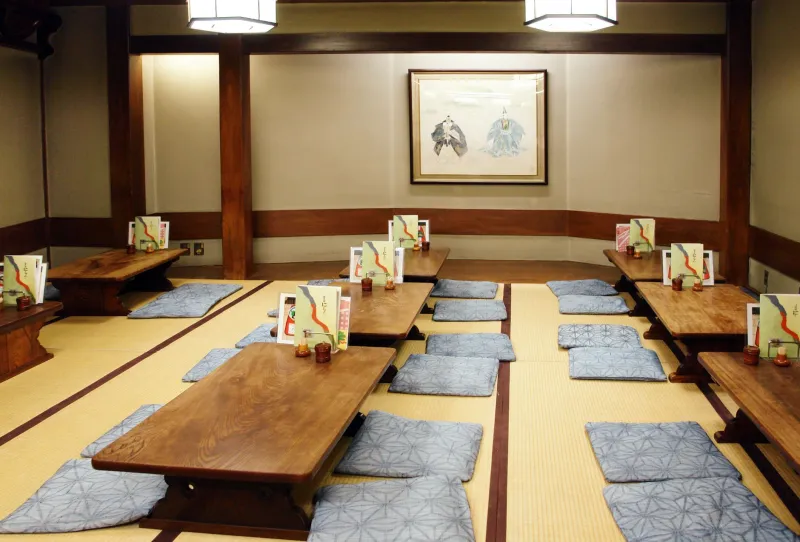
In Sagamihara's tea houses, the arrangement of objects on a table isn't decorative in the Western sense. Every item has a purpose, and nothing is placed without thought about how it will be used and experienced. The Japanese aesthetic concept of ma — roughly translated as "negative space" or "meaningful emptiness" — plays a role here too. Less really is more.
When setting your own table for guests, try pulling back rather than layering on. Instead of covering every inch of the table with candles, centerpieces, and place card holders, choose one or two elements that genuinely add something. A simple ceramic dish with a few seasonal items — some persimmons in fall, a few sprigs of fresh herbs in summer — does more than an elaborate floral arrangement that makes it hard to see the person across from you.
Consider the practical details too. Are the glasses easy to reach? Is there enough elbow room? Is the lighting comfortable for conversation, or is it so dim that everyone's squinting? These aren't glamorous questions, but they're the ones that actually determine whether your guests feel at ease.
The Quiet Power of Anticipatory Service
One of the most striking things about Japanese hospitality — the part that tends to stay with people long after they've left — is what you might call "anticipatory service." It's the practice of noticing what someone might need next and providing it before they have to ask.
In a ryokan context, this might look like a staff member quietly refilling your tea when it's half empty rather than waiting for you to notice it's gone. In your home, it might look like keeping an eye on the food and refreshing dishes before they're scraped clean. It might mean noticing when a guest seems a little lost in a group conversation and drawing them in with a direct question.
The psychology here is interesting. When people have to ask for things, there's a tiny but real moment of friction — a reminder that they're a guest, that they're not entirely at home. Omotenashi aims to eliminate that friction almost entirely. Your guests should feel, as much as possible, like the evening is unfolding naturally around them.
Bringing It All Together: A Few Practical Starting Points
You don't need to overhaul your entire approach to entertaining overnight. Omotenashi is a practice, not a performance, and it builds gradually. Here are a few places to start:
Know your guests before they arrive. Send a casual message beforehand asking about dietary needs — not just allergies, but preferences. It signals that you're paying attention.
Create a moment of arrival. In Japanese hospitality, the threshold between outside and inside is treated as meaningful. Greet guests at the door, take their coats, offer them something to drink within the first two minutes. Don't let them stand in the entryway wondering what to do with themselves.
Limit the number of decisions your guests have to make. Omotenashi isn't about giving people endless options. It's about making thoughtful choices on their behalf. A curated menu of two or three things you've made really well beats a buffet of ten mediocre options every time.
Wind down with intention. The Japanese tea ceremony has a formal close — a moment that signals the experience is complete. Your gatherings don't need ceremony, but having a natural ending (a final round of tea, a small sweet, a genuine moment of thanks) leaves guests with a sense of wholeness rather than the evening just sort of trailing off.
The Bigger Picture
What makes omotenashi resonate so deeply with people who encounter it — whether in a Sagamihara tea house or a traditional inn in the Japanese countryside — is that it's fundamentally about respect. It says: I thought about you before you got here. Your comfort matters to me.
In a culture where hosting often tilts toward impressing rather than serving, that shift in orientation feels almost radical. But it doesn't require a bigger budget or a fancier kitchen. It just requires paying attention — and caring enough to act on what you notice.
That's something any of us can do, right here at home.