Good Things Take Time: What Sagamihara's Fermentation Artisans Know That Your Grocery Store Doesn't
Walk into a supermarket in just about any American city and you'll find a wall of instant gratification. Instant broth. Quick-dissolve miso packets. Shelf-stable soy sauce made in a matter of days through chemical acceleration. Everything is designed to get from factory to table as fast as humanly possible. And honestly? It's convenient. Nobody's arguing with that.
But here's the thing — in Sagamihara, there are craftspeople who've been doing something radically different for generations. They're not in a hurry. And the products they make because of that patience are in a completely different league.
What Fermentation Actually Is (And Why It's Not Gross)
Let's clear something up right away. A lot of Americans hear the word "fermentation" and picture something going bad in the back of the fridge. That's not what we're talking about here.
Fermentation is a controlled, intentional process where microorganisms — bacteria, mold, yeast — transform raw ingredients into something more complex, more nutritious, and more flavorful than what you started with. It's how wine happens. It's how sourdough works. And it's the foundation of some of Japan's most essential pantry staples: miso, soy sauce, sake, and koji.
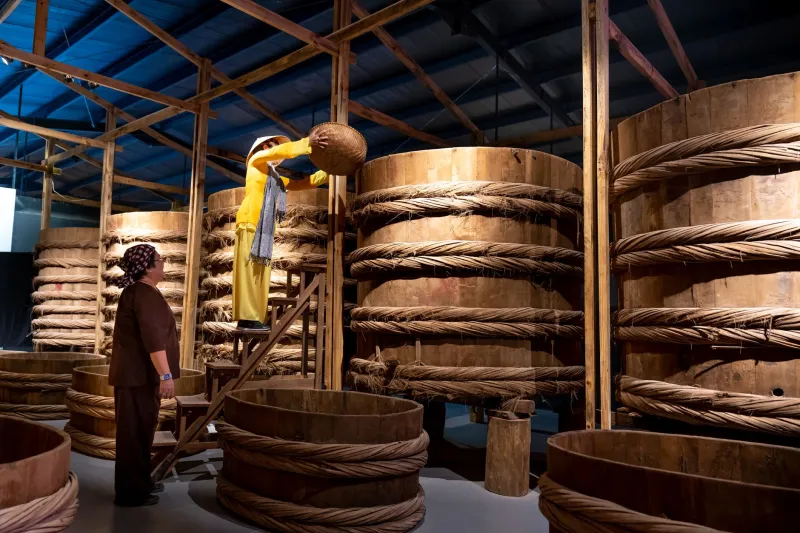
In Sagamihara's traditional fermentation houses, this process is treated with the same reverence that a sculptor gives to marble. You can't rush it. You can only create the right conditions and then wait — sometimes for months, sometimes for years.
The Three Pillars of Sagamihara's Fermentation Tradition
Miso is probably the most recognizable of the bunch. Most Americans know it from the little cup of soup that comes with sushi. But traditional miso — the kind produced using methods passed down through Sagamihara's artisan culture — is a completely different animal from the mass-produced paste in your average grocery store. Crafted from soybeans, salt, and koji (more on that in a second), aged miso develops a depth of flavor that food scientists actually struggle to fully map. The longer it ferments, the darker and more complex it becomes. Some regional varieties age for two to three years before they're considered ready.
Soy sauce gets a similar treatment. Industrial soy sauce can be produced in as little as three days using hydrolyzed proteins and artificial coloring. Traditionally brewed soy sauce — called shoyu — takes anywhere from six months to several years. The difference in flavor is not subtle. One tastes like salt. The other tastes like umami you didn't know existed.
Koji is the quiet superstar of the whole operation. It's a mold — specifically Aspergillus oryzae — that's cultivated on grains like rice or barley. Koji is what makes miso and soy sauce possible. It's also what gives sake its distinctive character. Sagamihara's koji cultivators treat their craft like a living art. The mold has to be grown in carefully controlled rooms, monitored for temperature and humidity, tended almost like a patient. Get it wrong and you get nothing. Get it right and you unlock enzymatic magic that transforms simple ingredients into something extraordinary.
The Science Behind the Wait
Here's where it gets genuinely fascinating. The reason traditionally fermented foods taste better isn't just romantic tradition — there's hard biochemistry behind it.
During long fermentation, enzymes break down proteins into amino acids, including glutamate, which is the source of that savory, satisfying umami flavor. Starches convert to sugars. Sugars get metabolized into organic acids. Microbial communities evolve and interact in ways that create hundreds of distinct flavor compounds. The longer this happens under the right conditions, the more complex and layered the result.
Rush it and you skip most of that chemistry. You get something that mimics the surface-level flavor without any of the depth underneath.
There's also a gut health angle that's getting a lot of attention in American wellness circles right now. Traditionally fermented foods are rich in live cultures — beneficial bacteria that contribute to a healthy microbiome. The research on this is still evolving, but what's already clear is that the processing methods used in mass-produced "fermented" products often eliminate these live cultures entirely. What's left is flavor without function.
What This Looks Like in a Real American Kitchen
So how do you actually bring this philosophy home? You don't need to build a koji cultivation room in your apartment. But you can start making choices that honor the process.
Read the label on your miso. Look for traditionally brewed miso with a short ingredient list — soybeans, rice or barley, salt, koji. If it has preservatives or flavor enhancers, it's been shortcut. Quality miso from Sagamihara-region producers is available through specialty Japanese importers, and increasingly through platforms like this one.
Use your miso as more than soup. Traditional miso is a flavor powerhouse. Whisk it into salad dressings, use it to marinate proteins, stir a small spoonful into pasta sauce for depth, or spread a thin layer under the skin of a roast chicken. Chefs across the US have been quietly doing this for years.
Try fermenting something yourself. You don't have to start with miso — that's genuinely a multi-month commitment. But a simple shio koji (salt koji) can be made at home in a week and used as a marinade that transforms chicken, fish, or vegetables in ways that are almost unfair. Koji rice is increasingly available through Japanese grocery stores and online retailers.
Think about soy sauce differently. Keep a bottle of traditionally brewed soy sauce separate from your everyday cooking soy sauce. Use the good stuff as a finishing element — a few drops on a fried egg, a splash into a pan sauce right at the end. You'll use less and taste more.
The Mindset Shift That Changes Everything
Beyond the recipes and the biochemistry, there's something else Sagamihara's fermentation masters are quietly teaching anyone who pays attention.
In a culture that's increasingly optimized for speed — same-day delivery, instant downloads, five-minute meals — the act of choosing to wait is almost countercultural. When you commit to a traditionally fermented ingredient, you're buying into a process that started long before you thought about dinner. Someone tended that miso. Someone monitored that koji room. Someone decided not to cut corners even when shortcuts were available.
That's a different relationship with food than most Americans have. And once you taste the difference, it's hard to go back to being satisfied with the fast version.
The fermentation artisans of Sagamihara didn't develop these traditions because they were inefficient or stubborn. They developed them because they understood something fundamental: the best outcomes — in food, and maybe in life — require conditions you create and then get out of the way of. You set things in motion, you maintain the environment, and then you trust the process.
Your grocery store doesn't sell that. But it's absolutely available if you know where to look.